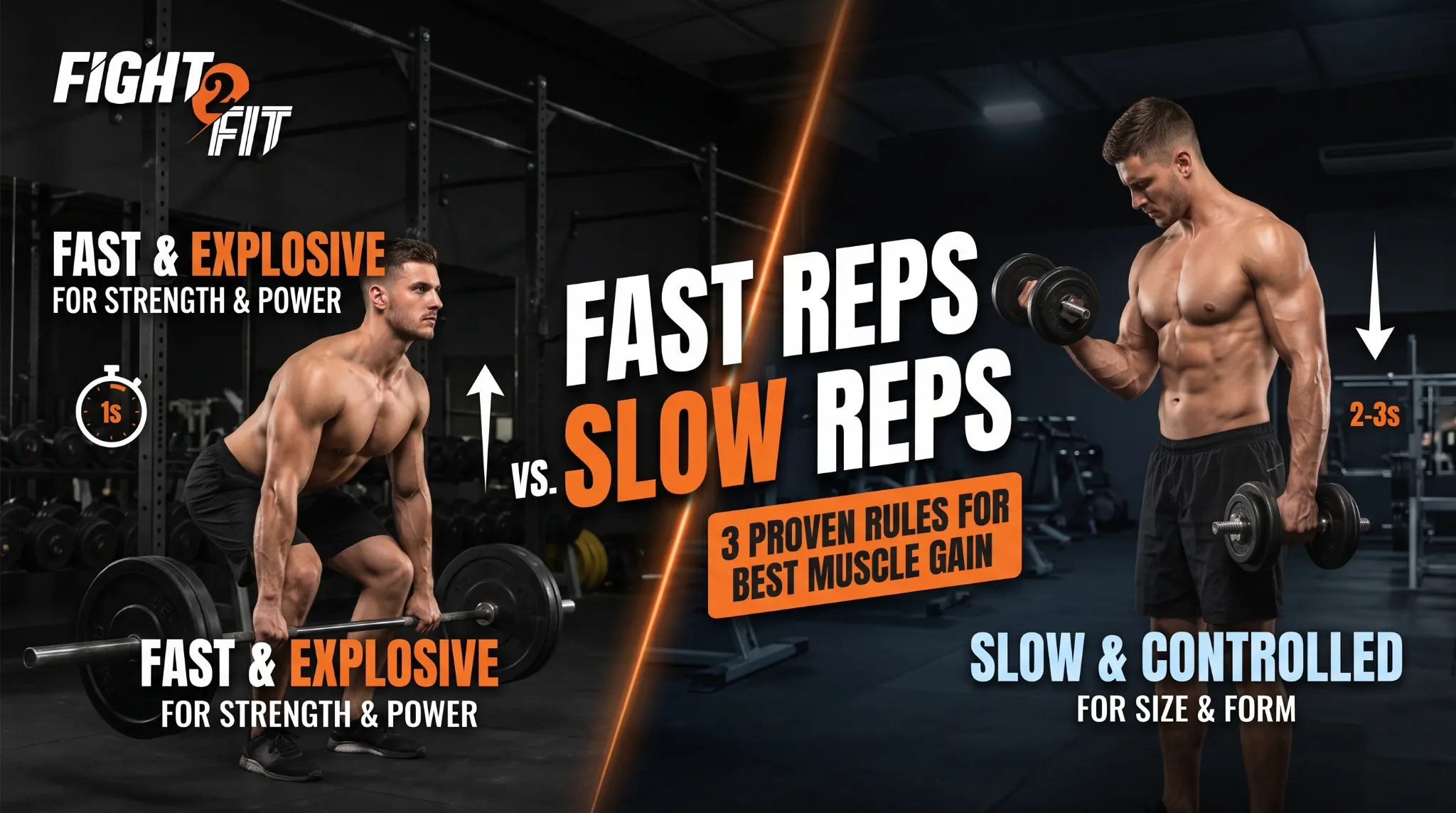
Walk into any gym today and you will see the fast reps vs slow reps debate playing out right in front of you. Half the gym is lifting weights as fast as humanly possible, while the other half is moving in ultra-slow motion.
Most gym-goers get stuck in one of these two common traps on the floor:
- The Fast “Ego Lifter” Trap: Grabbing heavy dumbbells and swinging them up and down in seconds. Momentum does all the work, leaving you with sore joints and zero muscle growth.
- The “Super-Slow” Trap: Picking up very light weights and taking 10 seconds to finish a single rep. You feel a temporary burn, but your muscles never get strong enough to actually grow.
You do not need a complicated sports science degree to fix your workout. Here is the simple, real-world guide to fast reps vs slow reps so every set you do builds real strength and lean muscle.
Fast Reps vs Slow Reps: Quick Comparison Chart
Before you touch a barbell or cable machine today, this fast reps vs slow reps comparison shows how both lifting speeds actually work inside your body:
| Workout Factor | Fast & Explosive Reps (1 Second) | Slow & Controlled Reps (2–3 Seconds) |
| Main Fitness Goal | Maximum strength, power, and calorie burn | Muscle size, joint safety, and strict form |
| Muscle Fibers Worked | Fast-twitch fibers for explosive power | Deep fibers via high time under tension |
| Ideal Weight Load | Heavy (75% to 85% of your max lift) | Moderate (60% to 75% of your max lift) |
| Biggest Gym Risk | Swinging your body and straining joints | Using weights too light for muscle growth |
The 2-1-1 Tempo Rule: How to Combine Fast Reps vs Slow Reps
Here is the biggest secret that experienced lifters know: you do not have to choose between lifting only fast or only slow. In fact, sticking to just one speed holds back your results.
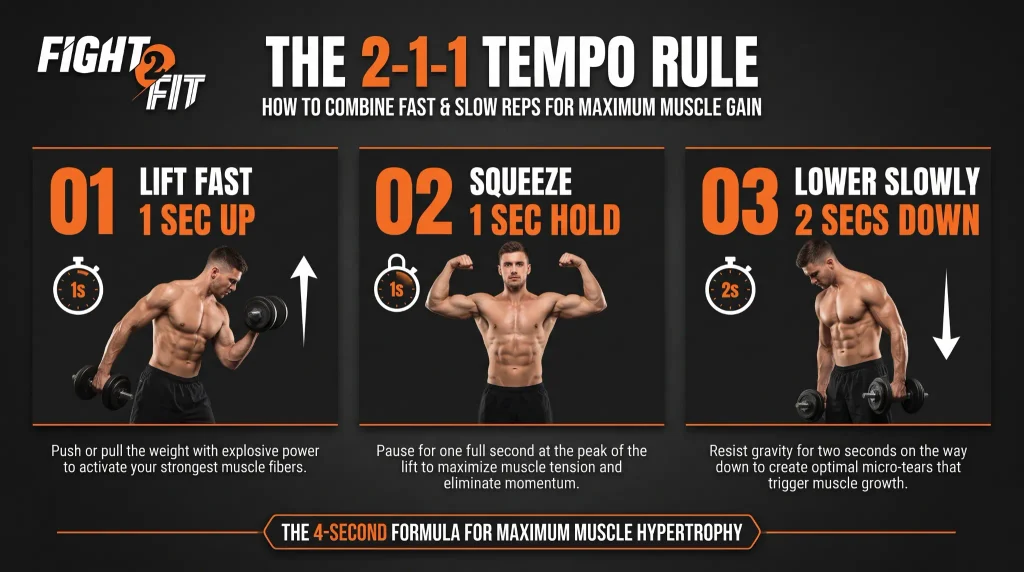
According to clinical studies on muscle hypertrophy and rep tempo, the fastest way to transform your physique is by combining fast reps vs slow reps inside every single repetition you perform. Trainers call this the 2-1-1 Tempo Rule, and it takes just four seconds per rep:
- Lift Fast (1 Second Up): Push or pull the weight up with explosive, controlled power. Lifting fast forces your nervous system to wake up and switches on your strongest muscle fibers.
- Squeeze at the Top (1 Second Hold): Pause for one full second at the peak of the movement. This simple hold locks blood flow into the target muscle and stops you from bouncing the weight.
- Lower Slowly (2 Seconds Down): Resist gravity as you bring the weight back to the starting position. Your muscles are naturally stronger on the way down, and this slow lowering phase creates the microscopic muscle tears that rebuild your body bigger and stronger.
3 Real Gym Problems With Rep Speed (And How to Fix Them)
When you misunderstand fast reps vs slow reps, your workouts stop delivering visible changes in the mirror. Check if one of these three rep speed mistakes is holding you back:
1. Your Elbows, Shoulders, or Lower Back Hurt After Lifting
When you let weights drop down too fast, gravity yanks directly on your joints and tendons instead of working your muscles. To fix this immediately, reduce your dumbbell or machine weight by 15% and take a smooth two to three seconds to lower the load on every single rep.
2. Your Bench Press and Squat Weights Are Stuck for Months
Many lifters try to push heavy barbells up slowly because they think it builds more size. In reality, pushing heavy weights too slowly drains your energy before you can finish the set. Lower the bar slowly for two seconds, then drive it upward as fast and powerfully as possible to break through strength plateaus.
3. You Finish 4 Sets of 12 Reps Without Feeling a Muscle Pump
Rushing through your set turns exercises like bicep curls and lateral raises into a full-body swinging motion where bigger muscles steal the work. Slow down and add a one-second freeze at the hardest point of every rep. If you struggle to feel the right muscles working, mastering fast reps vs slow reps is easy with our certified personal training programs that perfect your posture and lifting tempo from day one.
Gym Floor Cheat Sheet: Fast Reps vs Slow Reps by Exercise
Not every gym exercise should be performed at the exact same speed. When applying fast reps vs slow reps across your weekly workout routine, match your tempo to the exercise type below:
| Exercise Type | Common Gym Examples | Best Rep Speed | Why It Works Best |
| Heavy Compound Lifts | Squats, Bench Press, Deadlifts, Shoulder Press | 2 sec down, 1 sec fast up | Builds maximum strength without getting stuck |
| Small Muscle Isolation | Bicep Curls, Lateral Raises, Tricep Pushdowns | Slow (2–3 sec both ways) | Stops body swinging and isolates small muscles |
| Fat Loss & Conditioning | Battle Ropes, Kettlebell Swings, Sled Pushes | Fast & Explosive | Spikes heart rate and burns calories fast |
Frequently Asked Questions (FAQs)
1. Do slow reps burn more fat than fast reps?
In the fast reps vs slow reps comparison for fat loss, fast reps burn slightly more calories during your workout because explosive movements demand more oxygen. However, slow lowering reps build lean muscle tissue, which boosts your resting metabolism all day long.
2. Should gym beginners start with fast reps or slow reps?
When choosing between fast reps vs slow reps, beginners should always start with slow, controlled reps for their first four to six weeks. Slowing down teaches proper posture, protects your joints from injury, and builds a strong mind-muscle connection.
Conclusion: Control the Weight – Don’t Let It Control You
Winning the fast reps vs slow reps game on the gym floor is simple: lift the weight with power, pause at the top, and lower it slowly with zero ego.
Once you stop counting random reps and start making every single rep count, your strength and physique will transform twice as fast. Explore our flexible Fight 2 Fit Gym membership plans and walk into Fight 2 Fit Gym today to train with top-tier equipment and expert floor guidance!